Woodland Birdwatching in Spring: Where to Look and What to Listen For
A layer-by-layer guide to spring woodland birding: where each species sings, when the dawn chorus peaks, and how to read territory and nesting behaviour without disturbing anything.
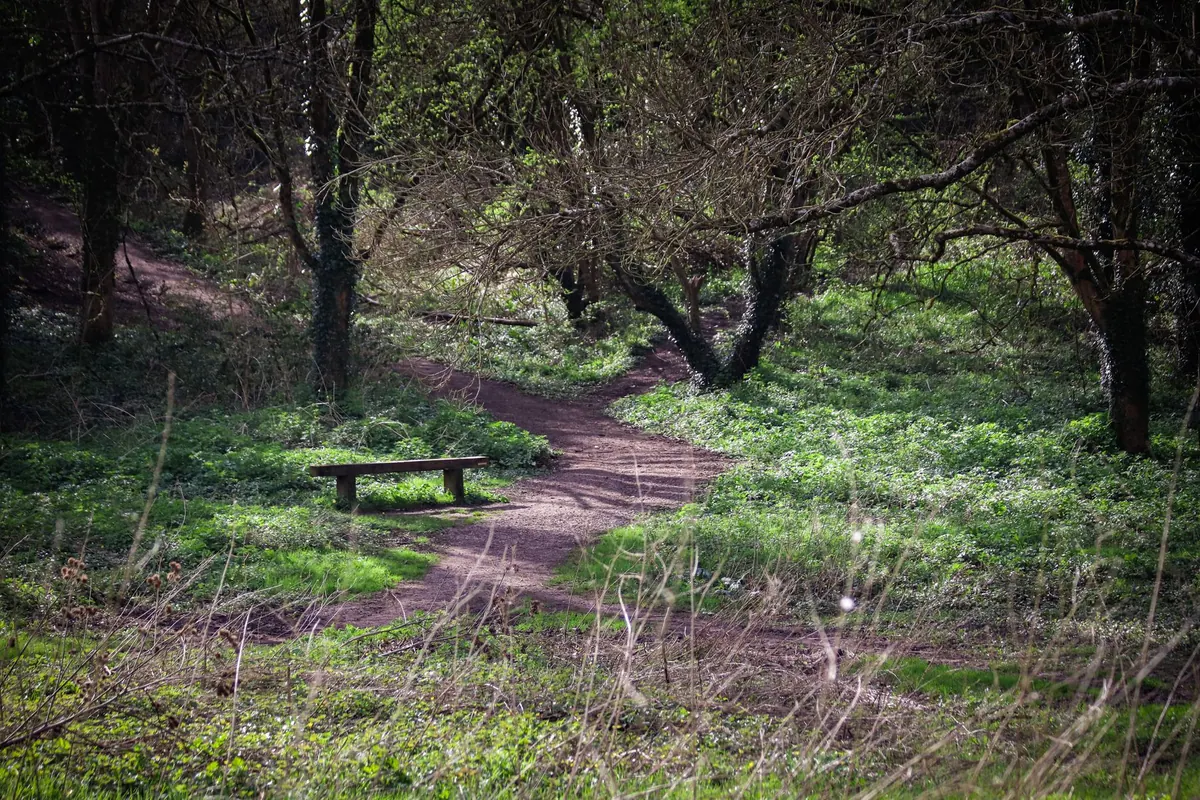
A wood in late April is not the wood you walked through in January. The bare architecture has filled in, the light has changed, and the place is suddenly loud. Summer migrants have arrived, residents have paired up, and every layer from the leaf litter to the top of the oaks is being used for something.
The trick to spring woodland birding is to stop treating a wood as one place. It is a stack of habitats, each with its own birds, its own timing and its own sounds. Get the layers and the clock right, and a two-hour walk will give you more than a whole day in February.
Read the wood in layers
Most beginners scan at eye level, which is the least productive height in a wood. Work up and down instead, and give each layer five minutes.
Canopy
Oak, ash, beech and birch tops. Watch for movement against the sky, and listen for song coming from above your head. Chaffinch, blackcap and chiffchaff all sing up here, and in western oakwoods the wood warbler's spinning trill often comes from high in the leaves. Woodpeckers drum from dead limbs, and in conifer blocks you are in goldcrest, siskin and crossbill territory. Spotted flycatchers, arriving in May, hunt from bare branches at the canopy edge.
Mid-storey and shrub layer
This is the busiest part of a spring wood, and the part most people walk straight past. Hazel, hawthorn, honeysuckle and young birch hold blackcap, garden warbler, willow warbler and the tits. Nuthatch and treecreeper work the trunks between layers, marsh tit and willow tit prefer scrubby edges, and in the upland oakwoods of Wales, the Lakes and the Highlands, pied flycatchers and redstarts use holes and boxes at exactly this height.
Field layer and deadwood
Ground cover, logs, stumps and the tangle at the base of hedges. Wren, robin, dunnock and song thrush feed here, and a blackbird turning over leaf litter makes a noise you can hear from ten metres away. Standing dead trees repay a long look: tits excavate in soft wood, nuthatches use old holes, and tawny owls roost in them year-round. Woodcock sit tight in damp, rushy corners, while tree pipits sing from the tops of young trees along the edge.
Time it right: the dawn chorus
The most common mistake is arriving at nine in the morning. By then the chorus is over, birds are feeding or building, and song is sporadic. The chorus builds before sunrise and fades fairly quickly after it. Robins usually start first, sometimes more than an hour before the sun appears, then song thrush and blackbird, then wren, dunnock and the tits, with the warblers joining as the light strengthens.
Conditions matter as much as the clock. A still, dry, mild morning is worth the alarm; wind and heavy rain suppress song almost entirely.
- Arrive in the half-light and let your eyes adjust for ten minutes.
- Plan on roughly ninety minutes of chorus, starting from first light.
- Begin on a sheltered, south-facing edge, which warms and wakes first.
- Stand still for long stretches. Walking scares birds and masks song.
- Leave the rustling waterproof at home and wear soft layers.
- Note the times. After a few visits you will know what sings when in your own wood.
Six songs that will change what you hear
- Chiffchaff: it says its name, evenly, with a slight swing.
- Willow warbler: a soft, descending ripple, less rhythmic and less insistent than the chiffchaff.
- Song thrush: repeats each phrase two or three times before moving on.
- Blackcap: fluty and scratchy in turns, starting and stopping abruptly.
- Garden warbler: a continuous, even babble with no clear theme to hold on to.
- Nuthatch: loud, slightly hurried whistles, often from a trunk rather than a twig.
What the singing is telling you
Spring song is mostly advertisement and defence. Males sing to hold a territory and attract a mate, and the loudest, most persistent singers are usually unpaired birds. Once a male pairs up, his song rate drops sharply, which is why a wood can sound quieter in mid-May than it did in April while holding exactly the same birds.
Listen for countersinging: two birds answering across a boundary, sometimes matching phrases, sometimes escalating. That is a territorial exchange, and if you can see both singers you have found the line they argue about. Sudden agitated scolding from tits, blackbirds or a wren usually means a predator, and it is worth following. A sparrowhawk, a tawny owl or a cat is often sitting quietly at the centre of the noise.
One thing to leave alone: playback. Drawing a male in with a recording pulls him away from feeding and territorial work at the most demanding point in his year. Resist it in spring, however tempting the silence feels.
Nesting signs, read from a distance
You do not need to find nests to know they are there. Watch for behaviour instead.
- Material runs: birds carrying moss, feathers, cobwebs or sheep's wool, usually to the same spot.
- Food runs: adults with beaks packed with caterpillars, flying repeatedly to one place. That means chicks.
- Fresh wood chips below a trunk, or a neat round hole in dead wood. Nuthatches plaster mud around the rim of a hole or box.
- Alarm and distraction: a robin ticking, a wren churring, or a bird dropping to the ground and dragging a wing.
- Sudden local silence where there was song ten minutes earlier.
Keep your distance and keep your binoculars up. In the UK, all wild birds, their nests and their eggs are protected while a nest is in use, and a small number of species have extra protection against disturbance; if you are unsure what applies where you are, check the current guidance before you go looking. If a bird is alarming at you, you are too close. Move away and give the area a wide berth.
Putting it together: a spring morning that works
Park before first light, walk in slowly along a ride or woodland edge, and stop where two habitats meet, such as a ride junction or the point where the wood opens into a clearing. These edges hold more birds than the middle of a block, and they give you a chance of seeing what you hear.
Then settle into a rhythm: stand still for ten minutes, listening; move twenty paces; stand still again. Spend the last half hour