Binoculars Checklist for Birdwatchers: 8 Features to Test Before You Buy
A practical checklist for birdwatchers: test magnification, field of view, close focus, eye relief, weight, ergonomics, weatherproofing and warranty before buying binoculars.
Binoculars are the one piece of kit most birdwatchers use every time they go out. They hang around your neck, press against your glasses, and decide whether you catch the flick of a warbler or just hear it. Specifications can narrow the shortlist, but they cannot tell you how a pair will feel in your hands at hour three. Before you buy, test these eight features. If you can, visit a shop with a view—or buy from a retailer with a straightforward returns policy.
Optical Basics: Magnification and Field of View
1. Magnification
Magnification is the headline number: 8x, 10x, 12x. It tells you how many times closer the bird appears. More is not automatically better. A 10x binocular magnifies more than an 8x, but it also narrows the view and amplifies every wobble in your hands. In dense woodland, where birds move fast and close, an 8x is often easier to use. On open water or across an estuary, a 10x can help you pick out a diver or a distant wader. Test by holding each pair to your eyes for a minute. Can you keep the image steady on a sign or a leaf? If not, drop to a lower magnification. The common 8x42 and 10x42 sizes are popular for good reason: they balance power, brightness and weight.
2. Field of View
Field of view is how much you can see at once, usually given in degrees or metres at 1,000 metres. A wide field makes it easier to find a bird and follow it as it flits through a hedge. A narrow field feels like looking through a straw, especially with higher magnification. In the shop, look at a broad scene and notice how much is visible without moving the binoculars. Then pan slowly across a shelf or a tree. Check the edges: are they sharp, or do they blur and curve? Wide is useful, but edge quality matters more for long looks. If you watch flocks or fast-moving birds, put field of view high on your list.
Close Focus and Eye Relief: Comfort Up Close
3. Close Focus
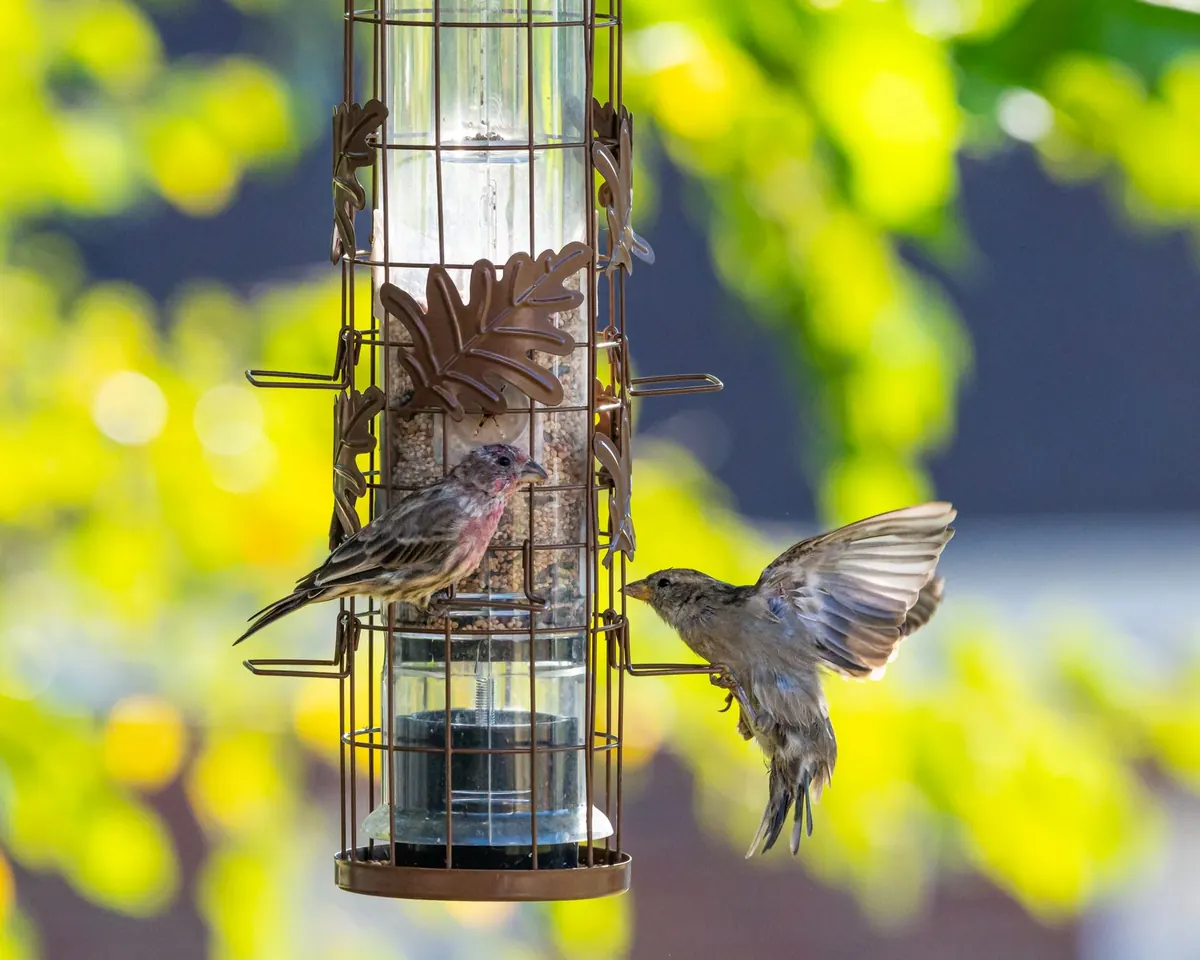
Close focus is the nearest distance at which the binoculars will focus. Some will focus down to around 1.5 metres; others stop at 4 metres or more. This matters if you watch feeders from a kitchen window, study insects, or follow small birds in a bush just beyond arm’s reach. Test it in the shop by focusing on the nearest object you can find—a sign, a plant, a pattern on the wall. Does the focus wheel still turn smoothly at that distance? For garden birdwatching and patch walks, a close focus of about 2 metres or less is often handy.
4. Eye Relief and Eyecups
Eye relief is the distance between your eye and the eyepiece where you see the full field of view. It matters most if you wear glasses. Without enough eye relief, you will press the binoculars against your lenses and still see a narrowed tunnel. Look for long eye relief and twist-down eyecups. With glasses on, adjust the eyecups down and check whether you can see the whole circle comfortably. Without glasses, twist them up to block stray light. Also set the interpupillary distance—the hinge—so the two circles merge into one. If you see blackouts or a kidney-bean shape, the eye relief or eyecup position is wrong for you. Try another model.
Handling: Weight, Balance and Focus
5. Weight and Balance
Weight is easy to quote and easy to misread. A heavy pair that balances well in your hands can feel better than a lighter pair that tips forward. Hold the binoculars to your eyes for a full minute. Lower them. Hold them by one barrel as if you were carrying them on a walk. Check the strap: a thin strap will cut into your neck; a wide one or a harness spreads the load. If you have neck or shoulder trouble, try lighter 8x32 models or consider a harness. But do not sacrifice stability for a few grams. Shake ruins the view faster than weight.
6. Focus Wheel and Ergonomics
The focus wheel is the control you use most. It should fall under your index finger without moving your whole hand. Turn it from close focus to infinity and back. Is it smooth, or does it stick? Does it have backlash—a dead spot before it engages? Can you reach it with gloves on? Note the direction: some wheels turn clockwise to focus far, some counter-clockwise. That is personal preference, but it should feel natural. Check the dioptre adjustment, usually on one eyepiece. Set it, then look away and back. If it moves easily by accident, look for a locking version. Finally, try the binoculars one-handed. Can you hold them steady while
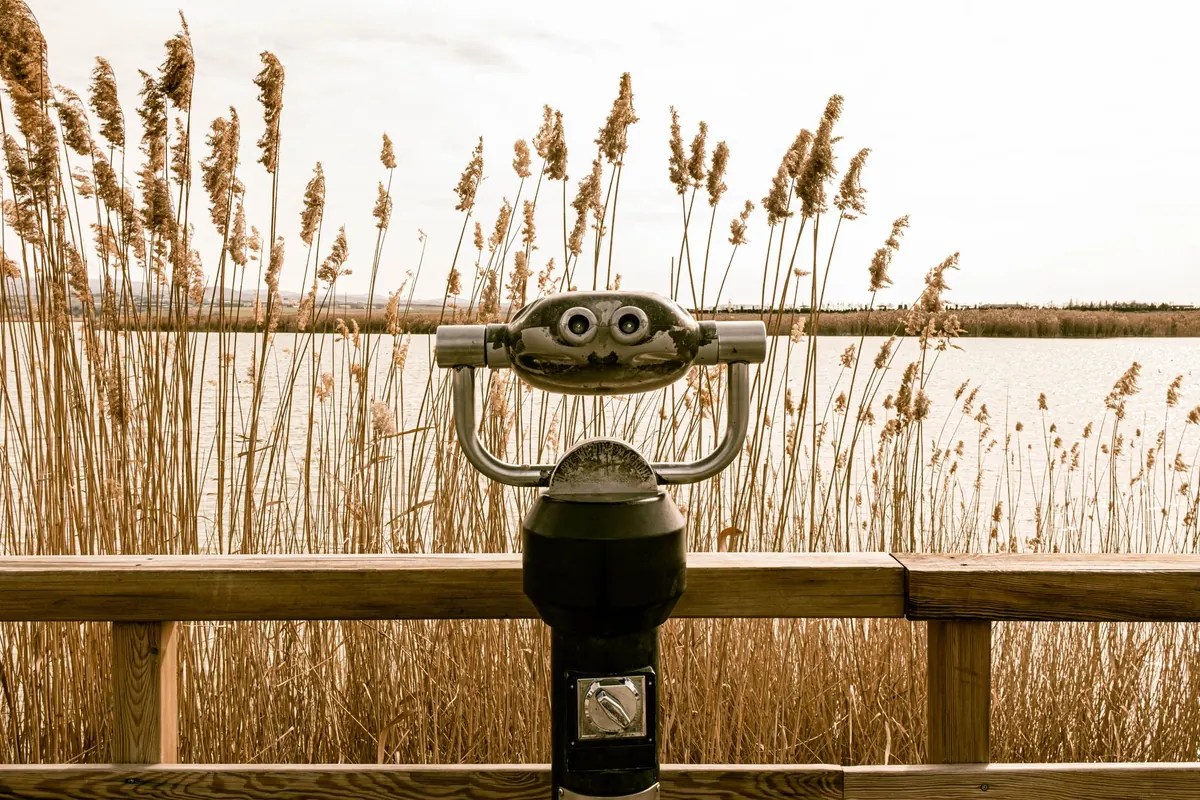
Photo: Ümit Çetin / Pexels